
India vs Australia, every innings in context
A Test lead, an ODI chase and a T20 finish each tell a different story. Explore India–Australia scorecards with a format-first approach that connects individual performances to the state of the match.
Explore the guide
A clearer way to follow the match
Read India and Australia step by step, from identifying the fixture to understanding the result.
Find the right fixture
Match the date, venue and competition to the teams. Check the format and distinguish a confirmed playing XI from the wider squad or a predicted lineup.
Read the innings total
Read runs, wickets and overs together. In a chase, add the target and remaining valid balls; in a Test, also track the innings lead.
Follow the partnerships
Use the fall-of-wickets entries to see when a stand began and ended. Individual totals alone cannot show how an innings changed over time.
Check the final status
Read the result line, including any revised target, draw or no-result. An unfinished score is a match position, not confirmation of the outcome.
Cricket with context


When reading the India national cricket team vs Australian men’s cricket team match scorecard, confirm the exact fixture first. An India–Australia scorecard should always be read with its format and innings number. A single batting total cannot explain a four-innings Test, while a limited-overs chase depends on a defined target and the deliveries available. The sections below show how to interpret those differences. They are an evergreen guide, with no claim to report a current fixture, selection or result.
Explore cricketThe essentials of India and Australia
Read India vs Australia cricket scorecards with confidence. Understand Test leads, ODI chases, T20 phases and useful head-to-head comparisons.
In a Test scorecard, keep each team's first and second innings separate. A side can lead after the first innings and still face a difficult chase later.
In an uninterrupted ODI, the chasing side normally needs one more run than the first innings total to win. The task changes as wickets fall and balls are used.
T20 cricket compresses decisions into a short innings. An opening spell can control scoring without producing many wickets, while a late cameo may change the final total with very few balls faced.
How to read the cricket scorecard
Use this sequence when following India and Australia. Each figure is more useful when tied to its innings.
Find the right fixture
Match the date, venue and competition to the teams. Check the format and distinguish a confirmed playing XI from the wider squad or a predicted lineup.
Read the innings total
Read runs, wickets and overs together. In a chase, add the target and remaining valid balls; in a Test, also track the innings lead.
Follow the partnerships
Use the fall-of-wickets entries to see when a stand began and ended. Individual totals alone cannot show how an innings changed over time.
Check the final status
Read the result line, including any revised target, draw or no-result. An unfinished score is a match position, not confirmation of the outcome.
Reading the game: India and Australia
Editorial notes on batting, bowling and match context. These cards contain cricket explanations.
A declaration closes an innings by choice and should not be described as being all out. Follow-ons and innings victories also affect how many innings appear.
A substantial innings can combine a measured start with acceleration later. Check partnerships and the distribution of scoring instead of assuming the highest strike rate made the biggest contribution.
Bowling economy needs the same context. Overs near the end of an innings often bring different risks from those in the middle.
For a match timeline, choose events that changed the task: a long stand, a burst of wickets, a declaration or a late shift in the chase equation. Explain the connection between the event and the match position.
Cricket, in focus
Explore the grounds, equipment and formats behind the game. The images are thematic cricket illustrations.
Formats
Test cricket
Different formats create different innings demands.
Match guide
ODI cricket
Read the surface alongside the match situation.
Cricket
T20 cricket
Follow the runs, wickets and overs together.

Cricket formats
Bowling figures need context from the phase of play.
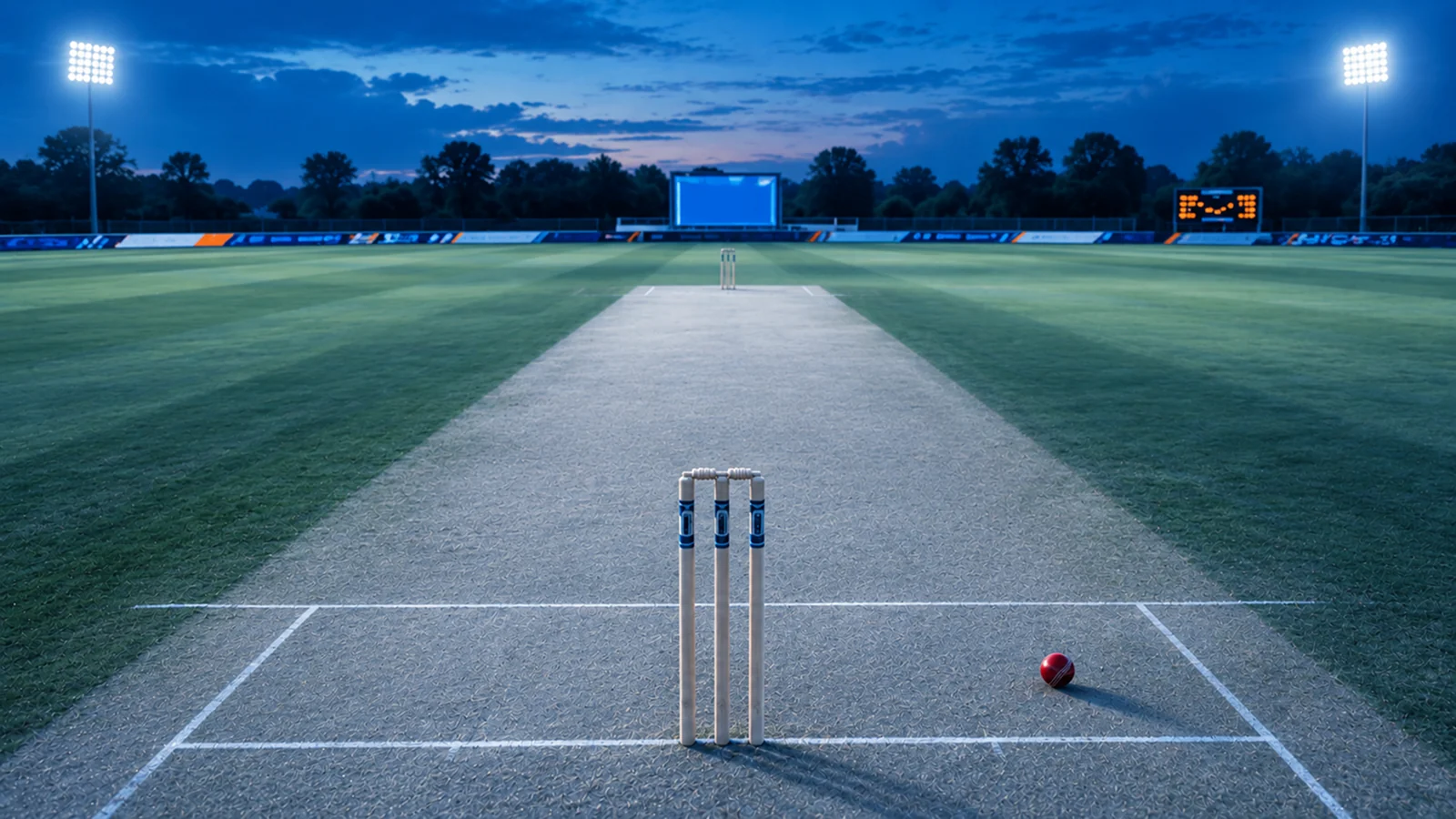
One-day cricket
A scorecard records the innings; commentary adds detail.

Rain and revised targets
Check the competition before comparing records.
The numbers behind cricket
Clear definitions help you read India and Australia. These examples explain cricket notation; they are not live match statistics.
Cricket questions, answered
How many innings can appear in a Test scorecard?
A Test can contain up to two innings per team. Declarations, follow-ons and the result can mean the match finishes before all four innings are completed.
What does declared mean beside a score?
The batting captain has chosen to close the innings. It does not mean all ten wickets have fallen.
Is a first-innings lead the same as a winning margin?
No. A first-innings lead describes an intermediate position. The winning margin is stated in the final result.
Can an India vs Australia T20 record explain their Test record?
The formats should be analysed separately because match length, team roles and scoring demands differ.